


What are the oxygen evolution anode materials in water electrolysis hydrogen production equipment?
Release time:
Apr 21,2022
There are also stringent standards for the oxygen evolution anode materials used in water electrolysis hydrogen production equipment. These materials must possess excellent electrical conductivity and chemical inertness, which not only saves electricity during the process of water electrolysis hydrogen production but also reduces chemical degradation for long-term use of the hydrogen production equipment. Moreover, the most important factor is the low price. When selecting anode materials for water electrolysis hydrogen production equipment, attention should be paid to their electrode reaction speed. Currently, the following materials are commonly used in water electrolysis hydrogen production equipment:
Metal and alloy materials, such as cobalt, zirconium, niobium, nickel, and precious metals, all have strong oxygen evolution catalytic activity, especially nickel metal. Nickel not only has corrosion resistance but is also relatively inexpensive.
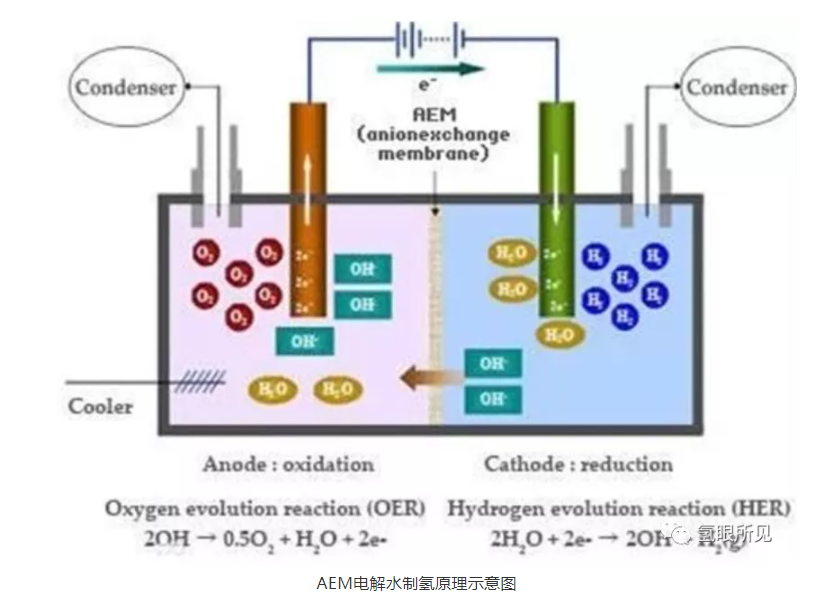
Precious metal oxides, such as RuO2, IrO2, and RhO2, also possess good oxygen evolution catalytic activity, but these precious metal oxides are not corrosion-resistant, and their prices are significantly higher compared to other metals.
Co3O4 oxide has strong electrocatalytic activity, which can improve the efficiency of water electrolysis hydrogen production.
AB2O4 spinel-type oxides. Among AB2O4 oxides, NiCo2O4 is currently considered the most promising alkaline water electrolysis material due to its high oxygen evolution activity, corrosion resistance in alkaline media, and relatively low cost.
ABO3 perovskite-type oxides. Among perovskite-type oxides, LaNiO3 has received the most extensive research. LaNiO3 is a non-stoichiometric compound with the coexistence of trivalent and divalent nickel ions and oxygen vacancies. The high density of oxygen vacancies makes LaNiO3 electrically conductive. Freeze-drying vacuum thermal synthesis and organic acid-assisted methods can be used to prepare homogeneous perovskite-type oxides with high specific surface areas at relatively low temperatures, greatly improving the catalytic activity of anode materials.
Composite coating film electrodes. Composite coating electrodes made of metal and oxide powders are mainly used to prepare electrode materials with excellent performance.
Key words:
Related News
Contact Us
Landline:+86-0755-82967058,+86-0755-82967036
Fax:+86-0755-82967080
E-mail:fly_aline2000@aliyun.com
Address: East Block, CLE Information Building, No.1 News Road, Futian District, Shenzhen

Watch Video]

contact us]